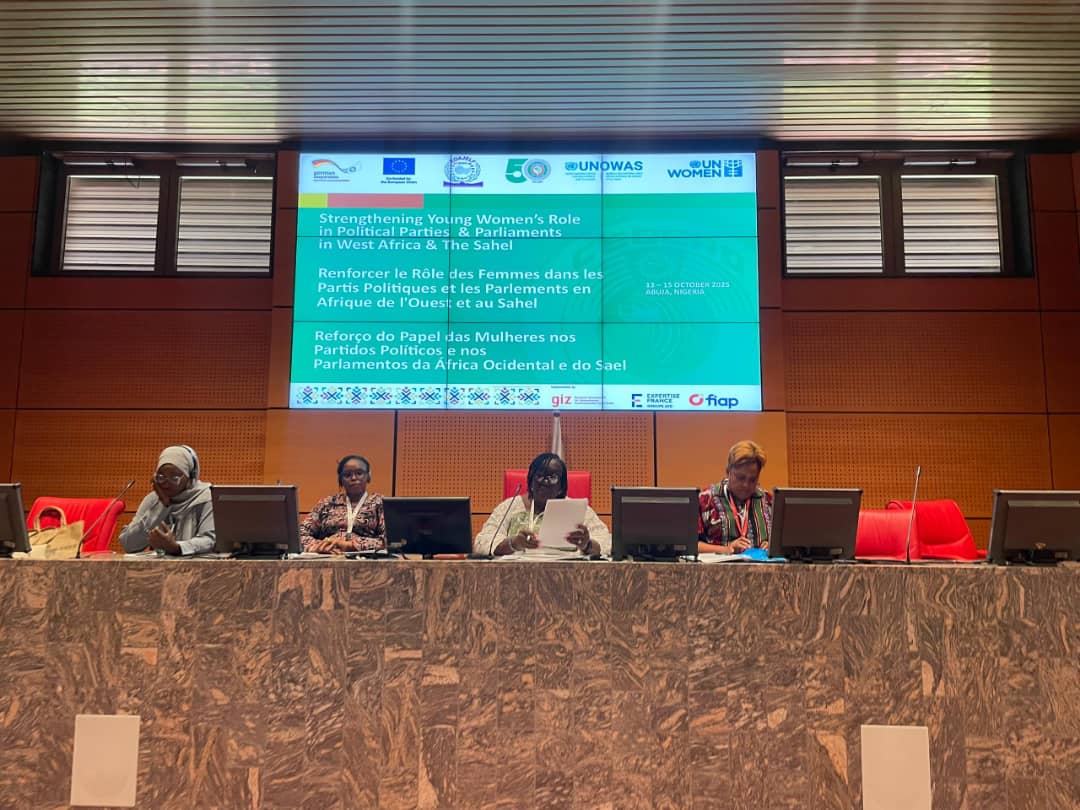
Female parliamentarians under the umbrella of the ECOWAS Female Parliamentarians Association (ECOFEPA) have renewed calls for at least 30 percent female representation in governance across West Africa, emphasizing that women remain the strongest instruments for peace, security, and development in the region.
They also called for the election of a female President of the ECOWAS Commission in the next administration, stressing that women’s leadership would promote inclusiveness and strengthen democratic governance in the subregion.
The call was made in Abuja during a three-day workshop themed “Strengthening Women’s Role in Political Parties and Parliaments in West Africa and the Sahel.”
Speaking at the opening, President of the Female Caucus in the ECOWAS Parliament and lawmaker from Sierra Leone, Ms. Veronika Sisay, said the forum was designed to build a new generation of women leaders capable of influencing policies and political decisions in their respective countries.
Ms. Sisay explained that although ECOWAS has made progress in women’s representation—currently at 25 percent in Parliament—efforts are ongoing to achieve at least 30 percent participation as mandated by regional frameworks.
“In my country, Sierra Leone, we have clocked the 30 percent already. Initially, we had 14 percent, but we worked hard to meet the target, and now we are even working to increase it in the next elections in 2028,” she said. “It was not an easy journey, but we did it. So we are encouraging other ECOWAS countries to follow our steps and ensure women’s representation is not just a policy on paper but a reality.”
She further explained that the mentoring programme aimed to encourage young women to take leadership roles early and change the perception that politics is a dirty game.
“We are advocating for a woman President of the ECOWAS Commission. Let history record that under the current chairmanship of Sierra Leone’s President Julius Maada Bio, ECOWAS took a groundbreaking step towards inclusive leadership by appointing the first female Commission President.
“Women are the best security. We are not just fighting for 30 percent for its sake. Women are partners in development and powerful instruments for progress. If only the men can give us a chance to work side by side with them, we could do it better,” Sisay said.
She added that women have always been at the heart of peace processes in West Africa, from rebuilding communities affected by conflict to ensuring food security and education for children, yet their voices remain underrepresented in key decision-making spaces.
Speaking further, she said, “After we have left, they will take our steps. We want them to learn early because politics is not dirty; it’s a platform to make an impact and transform lives. Our goal is to build a bridge between today’s women leaders and the next generation so that when it’s their turn, they will already have the experience, confidence, and network to lead effectively.”
Also speaking, Regional President of the ECOWAS Network of Young Women Leaders, Miatta Garmai Warwolor, said the session was part of a mentorship programme connecting experienced women parliamentarians with emerging female leaders from West Africa and the Sahel.
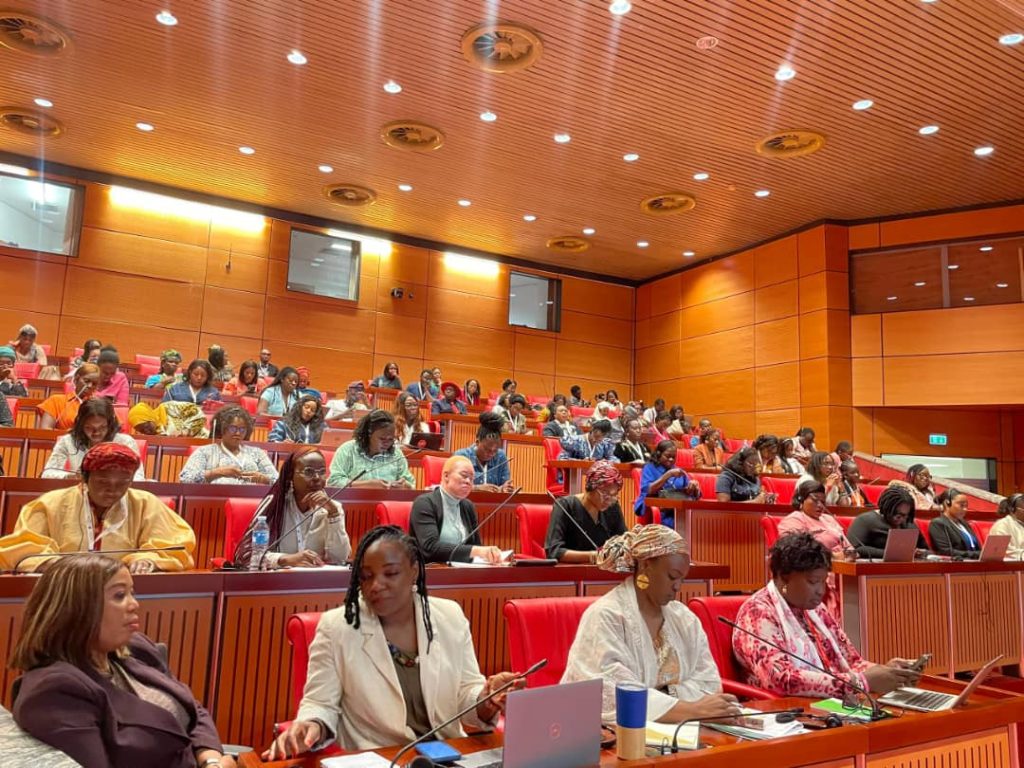
She noted that over 200 young women from ECOWAS countries, including Nigeria, Liberia, Gambia, and Senegal, were drawn through national networks and political party nominations to participate in the mentorship programme.
“We are here for a simulation session where young women leaders from across the region exchange knowledge with ECOWAS female parliamentarians. The goal is to build their capacity, interest, and confidence in political leadership. We hope to make this an annual event and a continuous process of bilateral mentorship between women parliamentarians and young leaders,” Warwolor said.
In her remarks, President of the West African Network of Young Women Leaders (Ivory Coast), Koko Tomia Aude, said the initiative provides a platform for women to join decision-making bodies and push for gender inclusion.
“We want a 30 percent quota that will allow us to work in all spheres of decision-making. The moment is now for all women to be engaged, to lead their communities, and to change social norms. Women’s leadership is not optional; it is necessary for sustainable development,” she emphasized.
Regional Vice President of the West Africa Youth Assembly and President of Project Nigeria, Awehi Hope Gabriel, described the programme as empowering.
“As a young woman in politics, this experience has broadened my understanding of leadership. It has shown us that we can aspire for positions at the highest levels of governance and still stay true to our values. The mentorship has renewed our courage to participate and lead change in our societies,” she said.
The three-day session in Abuja brought together over 200 young women leaders from across the ECOWAS and Sahel regions for mentorship and leadership training with female lawmakers from the ECOWAS Parliament.
The engagement with female parliamentarians of ECOWAS (ECOFEPA) was jointly organised by the Network of Young Female Leaders (ROAJELF) in collaboration with the ECOWAS Gender and Development Centre (EGDC), EU Support to ECOWAS in Peace, Security, and Governance (EPSG) project, UN Women, and UNOWAS.
Our Diplomatic Correspondent reports that the event was funded by the EPSG Project, implemented by Deutsche Gesellschaft für Internationale Zusammenarbeit (GIZ) GmbH in partnership with ECOWAS. EPSG is commissioned by Germany and co-funded by the European Union.
Sandra Chukwugekwu
About The Author