By Fatima Ali
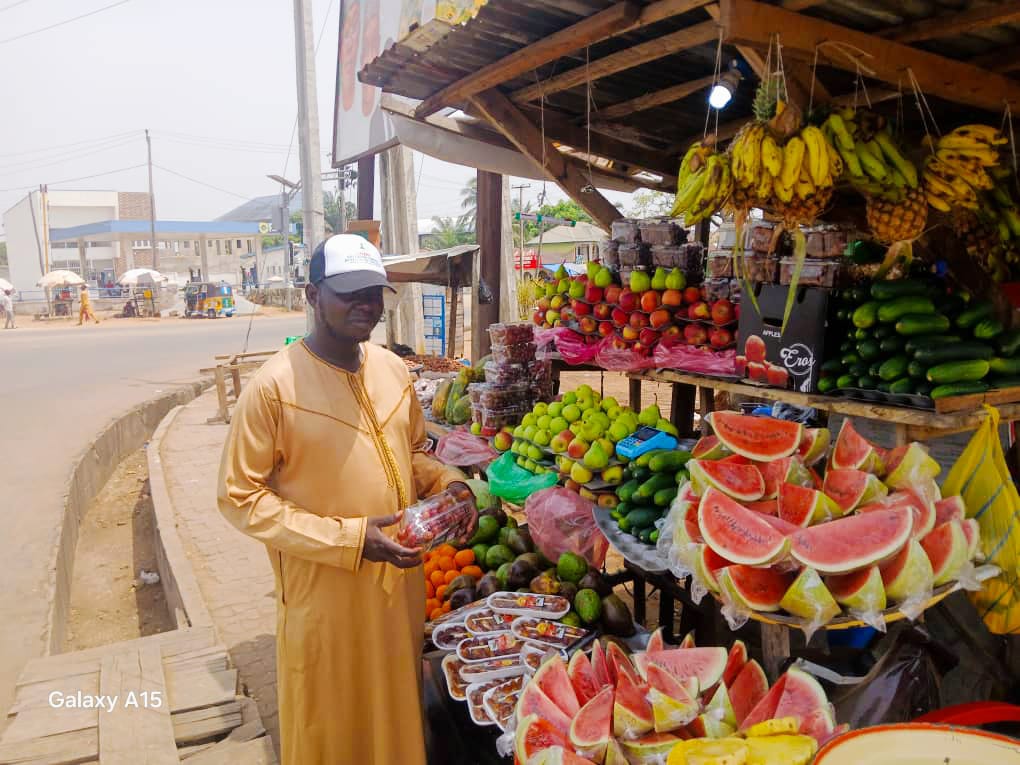
As Ramadan fasting enters its last ten days, the cost of fruits, a staple for Iftar, continues to rise in Lokoja, the Kogi State capital, putting pressure on household budgets.
A market survey conducted in Lokoja shows that a ball of watermelon now sells for between ₦1,500 and ₦4,000 depending on the size.
Oranges are sold for between ₦500 and ₦1,000 per pair, while pineapples cost between ₦1,500 and ₦3,000 depending on their size.
Green apples sell for about ₦400 each, while red apples cost around ₦700 each.
Similarly, bananas are sold for ₦1,500, ₦2,000, and ₦3,000 depending on the size of the bunch, while plantain costs from ₦3,000 and above per bunch, also depending on size.
In addition, grapefruits are sold for between ₦5,000 and ₦7,500.
Meanwhile, dates, popularly known as Dabino, have also recorded a price increase as a standard measure that previously sold for ₦2,000 now costs ₦3,000, while the Tiya standard measure, which earlier sold for ₦5,000, now goes for between ₦6,000 and ₦7,000.
Speaking with a correspondent, a fruit seller, Mallam Badamasi Bashir, lamented the impact of rising fruit prices on customers during Ramadan.
According to him, despite the high cost, many customers still buy fruits because of their importance in breaking the fast.
Mallam Bashir noted that with as little as ₦300 to ₦500, customers can still purchase small portions of fruits such as oranges, dates, sliced pineapple, and watermelon.
Also speaking, a customer, Hajiya Muslimat Idris, expressed concern over the high cost of fruits, noting that they remain an essential part of the fasting diet despite the rising prices.
She appealed to the government to introduce measures to control the prices of fruits and other commodities in order to make them more affordable for the public.
Edited by Ajifa Ainoko
About The Author