By Naanpoe Kwaplong
The need for inclusiveness in policy making and security initiatives to address farmer herder conflicts has been emphasized.
This was made known at a multi level and multi sectorial roundtable aimed at addressing incessant security challenges In plateau state.
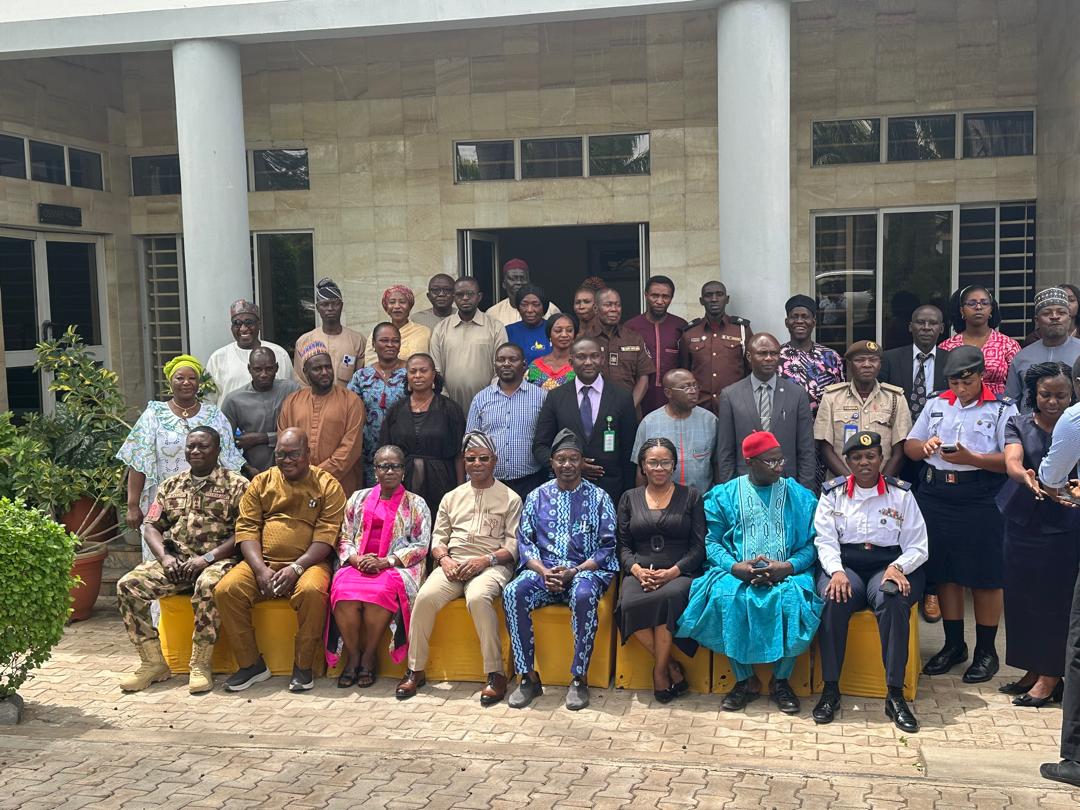
The forum brought together state and non state actors to discuss pathways to sustainable peace.

The roundtable was organized by the Centre for humanitarian dialogue HD in collaboration with the plateau state peace building Agency and GIZ peacecore.
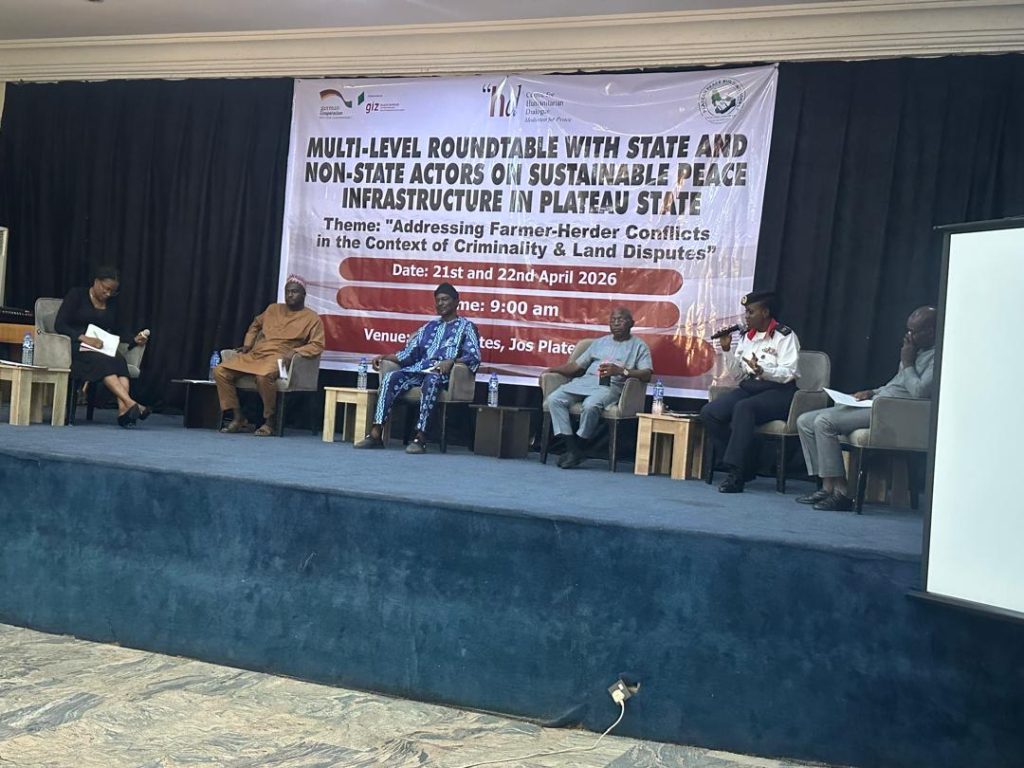
The forum, themed “Addressing Farmer-Herder Conflicts in the Context of Criminality and Land Disputes,” aimed to facilitate meaningful discussions among stakeholders, identify actionable strategies and frameworks to address farmer-herder conflicts within the broader context of criminality and develop sustainable peace infrastructure, among other objectives.
The Country Manager of the Centre for Humanitarian Dialogue, Dr. Chris Agoha, observed that the spate of criminalized violence has created deeper structural challenges within the state. He stressed the need to address these issues by strengthening existing peace mechanisms and ensuring inclusive participation in peacebuilding initiatives.
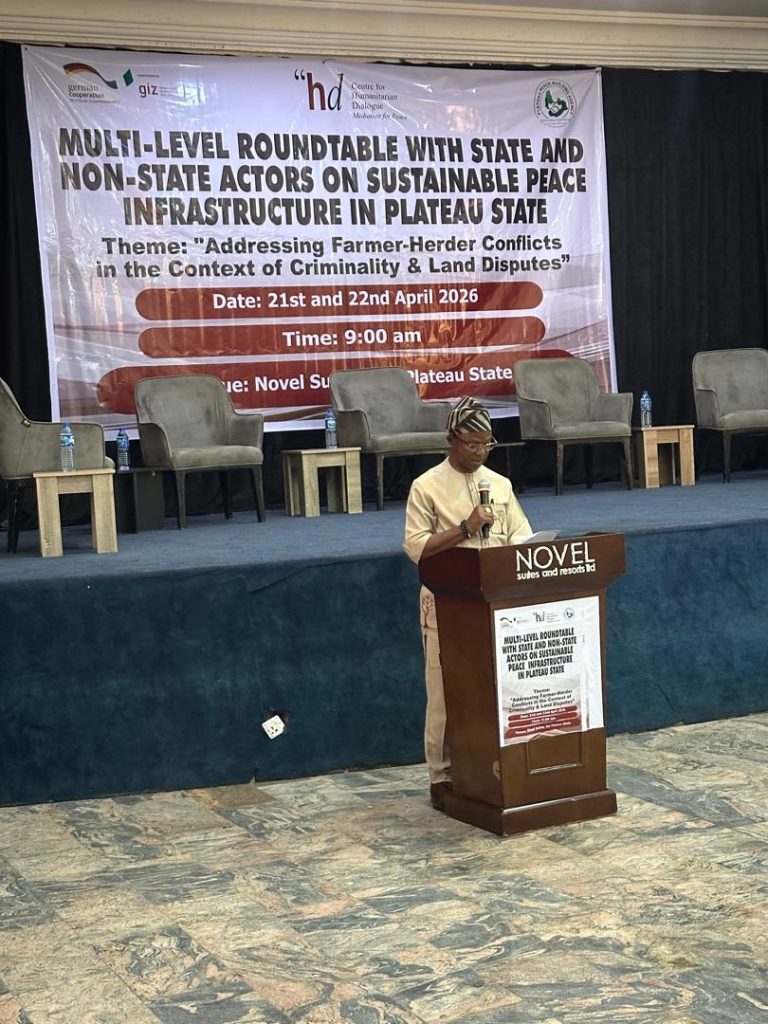
Dr. Agoha also noted that, in line with its mandate of inclusivity, the organization has brought together traditional institutions, community leaders, and government actors to ensure coordination and long-term impact.
He added that the ultimate goal is to mitigate violence and promote stability in both the short and long term.
Also speaking, the Director-General of the Plateau State Peace Building Agency, Dr. Julie Sanda, represented by Kyenpia Bulus, said the roundtable was timely and critical, as it provides a platform for stakeholders to engage in honest and constructive dialogue and collectively develop practical solutions for sustainable peace in Plateau state.
During the panel session, the Plateau State Commissioner for Livestock development ,vetenairy service and fisheries Mr Sunday Akpa noted that addressing security challenges in the country requires proper identification systems for all Nigerians, which would enhance efforts to track and apprehend criminal elements.
The panelists added that government must adopt a holistic approach to tackling insecurity, as unresolved conflicts often create an enabling environment for criminality to thrive.
Participants expressed optimism that the outcome of the dialogue will contribute significantly to address security challenges and foster sustainable peace not only in plateau state but across Nigeria.
Edited by Karen keyen
About The Author